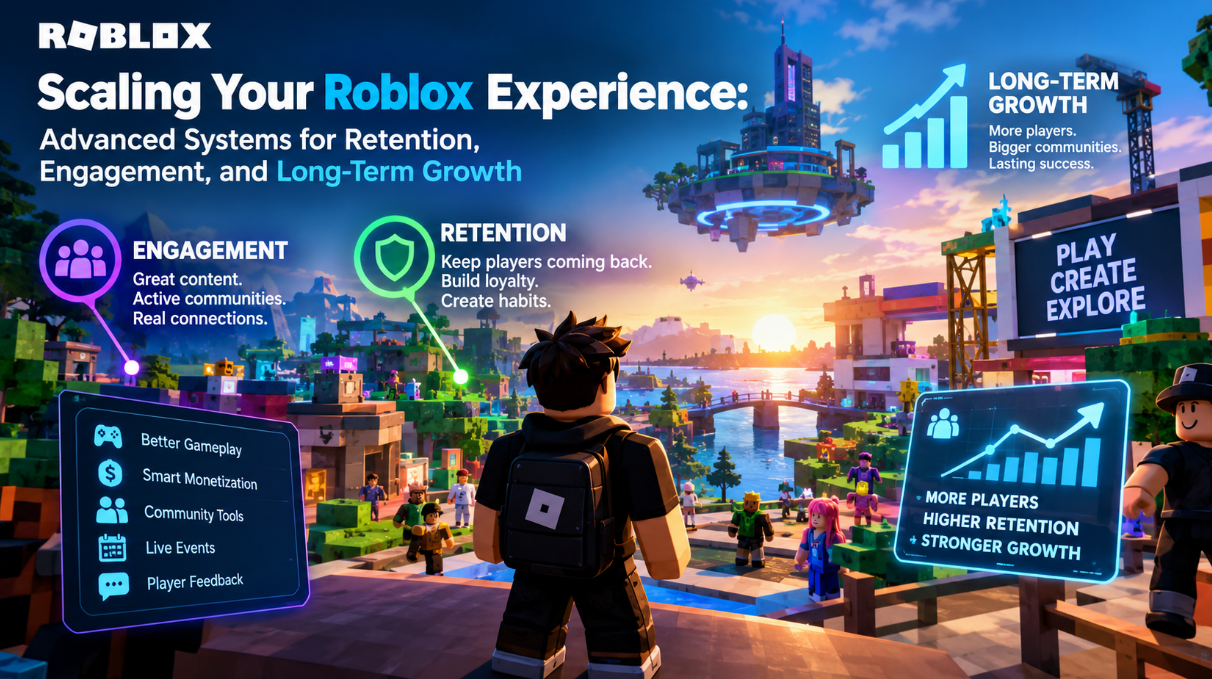
Once your Roblox experience has a steady player base, the hard part is no longer getting people through the door. The real challenge becomes keeping them coming back, turning casual visits into regular sessions, and building systems that still work when the concurrent numbers climb. Many creators hit a plateau here because they keep adding content the same way they did when the game was small. High-performing experiences treat retention and engagement as deliberate design problems rather than happy accidents. This guide focuses on the practical systems that experienced creators use to keep players invested over months instead of days.
Designing for Repeat Sessions Instead of One-Time Visits
A lot of experiences are fun the first time and then quietly lose players because there is no clear reason to return tomorrow. At scale, you need loops that give players a sense of progress, social connection, or unfinished business. This does not mean forcing daily quests onto every game. It means looking at what already feels good in your experience and giving those moments better structure and visibility. Players stay when they feel like their time is building toward something, even if that something is just a higher personal best, a better collection, or a stronger reputation inside the community.
Progress Systems That Feel Meaningful
The strongest retention systems give players a visible sense of advancement without turning the game into a pure numbers chase. Track the actions players already enjoy and surface that progress clearly. A well-designed level system, collection log, or seasonal track works best when the rewards feel connected to the core gameplay instead of being random. Experienced creators also pay attention to the pacing of rewards. Front-loading too many strong rewards makes the later game feel empty. Spreading meaningful upgrades across a longer timeline keeps the sense of forward movement alive. Test these systems with real players and watch where engagement drops. The data usually shows the exact point where the loop stops feeling rewarding.
Social Hooks That Encourage Returning With Friends
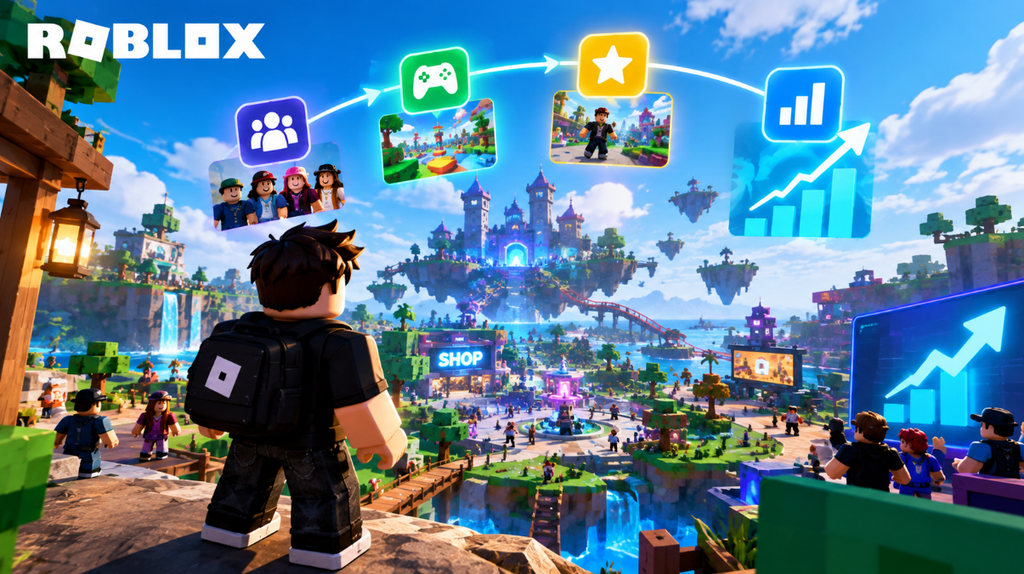
Roblox is inherently social, yet many experiences still treat multiplayer as an afterthought. Features that make it easy and rewarding to play with the same people repeatedly tend to produce stronger retention than pure solo content. Simple systems like shared progress, group goals, or light competitive boards between friends can give players a reason to message each other and queue up again. The key is keeping the social friction low. If it takes too many steps to invite someone or to see what your friends are doing, most players will not bother. Watch how your current social features are actually used and remove the friction points that slow people down.
Content Updates That Maintain Momentum Without Burning Out the Team
Regular updates are expected once an experience grows, but constant large content drops are rarely sustainable. The creators who keep their games healthy over long periods get good at shipping smaller, higher-impact changes and at making existing systems feel fresh again.
Prioritizing High-Impact Changes Over Volume
Not every update needs new maps or completely new mechanics. Sometimes the highest-impact work is improving onboarding for returning players, fixing the friction points that cause drop-off, or adding one strong new goal that reuses existing content. Look at your analytics for the moments where players leave and treat those as the priority list. A polished improvement to a core loop often retains more players than a flashy new area that only a small percentage of the audience ever reaches. Experienced teams also keep a running list of “quality of life” fixes and ship them alongside bigger features so the game feels cared for between major drops.
Seasonal Structure Without Over-Complexity
A light seasonal framework can give players a reason to check back without requiring a full content overhaul every month. The most effective versions keep the core gameplay intact and simply add a clear time-limited track, a few exclusive rewards, and a sense of a shared community goal. Complexity is the enemy here. If players need a long explanation to understand how the season works, many will ignore it. Keep the rules obvious, the rewards desirable, and the time commitment flexible so both casual and dedicated players can engage at their own pace.
Measuring What Actually Matters for Long-Term Health
Vanity metrics can be misleading. Concurrent players and total visits look good on a dashboard, but they do not always tell you whether the experience is healthy. Creators who sustain growth over long periods get specific about the numbers that predict retention and revenue.
Core Metrics Worth Tracking Weekly
Focus on returning player percentage, average session length for returning users, and the percentage of players who reach key progression milestones. These numbers reveal whether your systems are actually working. A spike in new visits means little if most of those players never come back. Likewise, strong monetization numbers can hide a shrinking core audience. Set simple weekly checks for these metrics and treat significant drops as design problems to solve rather than temporary noise. Over time you will start seeing clear cause-and-effect between the changes you ship and the health of the player base.
Using Feedback Without Getting Overwhelmed
Player feedback is valuable, but it arrives in a constant noisy stream. The most useful approach is to categorize feedback by frequency and by how many different types of players are saying the same thing. A complaint that appears across new players, regulars, and high-engagement users usually deserves attention. A loud request from a tiny fraction of the audience often does not. Experienced creators also separate “I want this new thing” feedback from “this existing thing feels bad” feedback. Fixing the latter almost always produces better retention than adding the former.
Putting the Systems into Practice
Sustainable growth on Roblox comes from treating retention and engagement as core design pillars instead of afterthoughts. The experiences that stay healthy for years usually share a few habits: they give players clear reasons to return, they update with focus rather than volume, and they measure the numbers that actually predict long-term success. You do not need to overhaul everything at once. Pick one area — progress clarity, social friction, update prioritization, or metric tracking — and improve it deliberately for a few weeks. The gains compound once the systems start reinforcing each other.
About the Author