At higher ranks in Fortnite, pure building speed stops being enough. Most players in Elite and above can already crank and edit quickly. The real difference shows up in how deliberately they control space, deny angles, and force the opponent into bad decisions. Strong piece control turns a chaotic fight into a series of small advantages that add up. This guide focuses on the practical habits and decision-making that consistent high-level players use when the builds start flying.
Understanding Piece Control as a Decision Skill
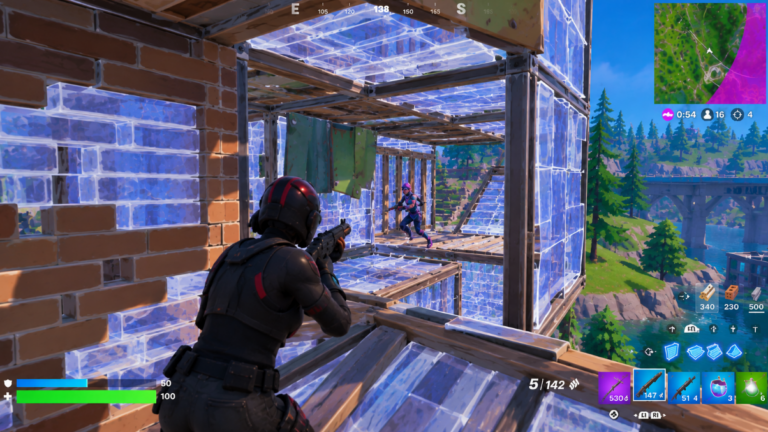
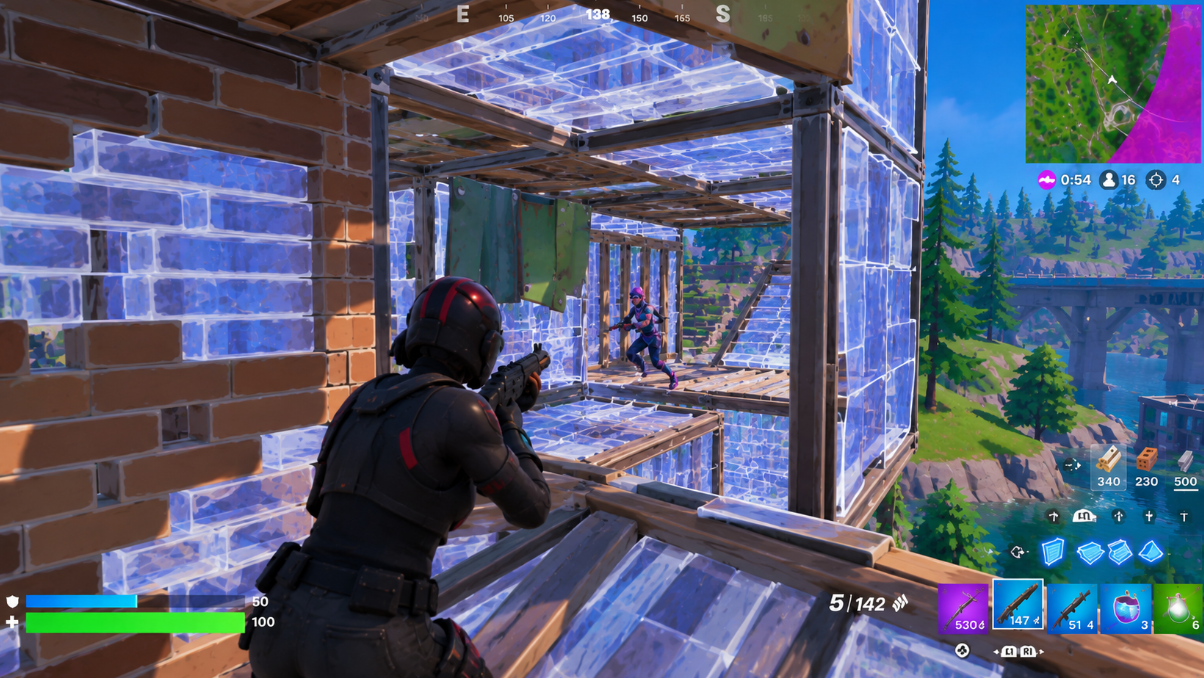
A lot of players still treat building as pure mechanics. They focus on how fast they can place walls, ramps, and cones without thinking about why each piece is going down. At a high level, every piece should answer a specific question: Does this block an angle? Does it create a new one for me? Does it force the opponent to spend materials or take a bad peek? When you start asking those questions in the middle of a fight, your building becomes a lot more efficient and a lot harder to play against. The goal is not to build the most. It is to build the least while still controlling the space that matters.
Claiming the First Layer With Purpose
The first layer of a fight often decides the rest of it. Instead of immediately going for height, many strong players focus on securing a solid ground or mid layer that limits the opponent’s options. A well-placed wall and cone combination can stop a pure rush and give you time to gather information. The key is making that first layer clean and intentional rather than panicked. Practice placing the minimum pieces needed to stop the most common push angles. Once that layer is stable, you can decide whether to take height, pressure for information, or reset. Players who skip this step and jump straight into chaotic cranking often find themselves low on materials with no real control of the fight.
Using Edits to Create and Deny Information
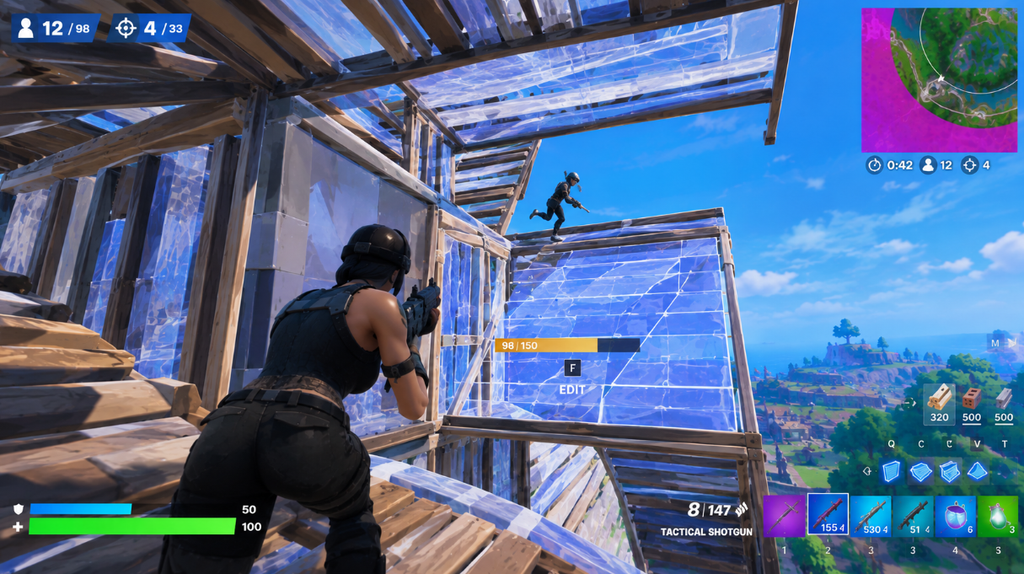
Edits are not just for shooting. High-level players use them constantly to gather information without fully committing. A quick window or stair edit can show you where the opponent is holding, how many materials they have left, or whether they are pre-aiming a certain angle. The same edit can also be used to deny information by closing it the moment you have what you need. This back-and-forth of opening and closing space is one of the clearest differences between average and strong fighters. Practice making small, low-commitment edits under movement so the habit stays available when the fight gets fast.
Forcing Material Disadvantages and Managing Your Own
Materials decide a lot of endgame and mid-game fights once everyone can aim and edit. The players who win more often are usually the ones who force the opponent to overbuild while staying efficient themselves.
Pressure That Costs the Opponent Mats
You do not always need to take a full fight to gain an advantage. Controlled pressure — short peeks, delayed edits, and fake pushes — can force an opponent to spend materials reacting. Each time they place extra walls or cones to feel safe, they move closer to a material deficit. Strong players track this roughly during the fight. When they sense the opponent is getting low, they look for the moment to harden the pressure or take a cleaner peak. This style of fighting rewards patience and awareness more than pure aggression.
Knowing When to Reset Instead of Forcing
One of the most common mistakes at high rank is refusing to reset when the material situation turns bad. If you have burned most of your mats and the opponent still has a healthy stack, continuing to fight on their terms usually ends poorly. A clean reset — breaking line of sight, repositioning, and rebuilding a stronger layer — often gives you a better chance than forcing a low-percentage spray. Practice recognizing the moment when the current fight is no longer in your favor and leaving it without panic. The ability to reset cleanly separates players who keep winning long sessions from those who throw winnable games by overcommitting.
Practical Ways to Train Piece Control
Random free-building and box fights help, but they are not enough on their own. The best improvement comes from practice that forces the same decisions you face in real ranked games.
Structured Fight Scenarios
Set up realistic starting conditions instead of always beginning with full mats and perfect positioning. Start some fights with limited materials. Start others already at a height disadvantage. Practice both the aggressive reclaim and the disciplined reset. The more you rehearse the exact situations that appear in ranked, the less mental energy those decisions cost when the game is live. Short, focused sessions with a clear goal (for example, “only play for material advantage today”) tend to produce better results than long unfocused grinding.
Reviewing Your Own Fights With a Specific Lens
When you watch your deaths or even your wins, look specifically at piece usage. Ask whether each major build sequence actually bought you something useful. Look for moments where you placed extra pieces out of panic and moments where a single well-timed edit could have given you free information. Over a few review sessions the patterns become obvious, and those patterns tell you exactly what to drill next.
Bringing It Together in Real Games
Advanced piece control is less about learning new fancy techniques and more about making better decisions with the techniques you already have. The players who climb and stay high are usually the ones who treat every wall, ramp, and edit as a deliberate choice rather than a reflex. Start by focusing on cleaner first layers and more intentional information edits. Once those feel natural, add the material-pressure and reset habits. Small improvements in how you control space add up faster than most mechanical upgrades once you are already at a solid mechanical level.
About the Author