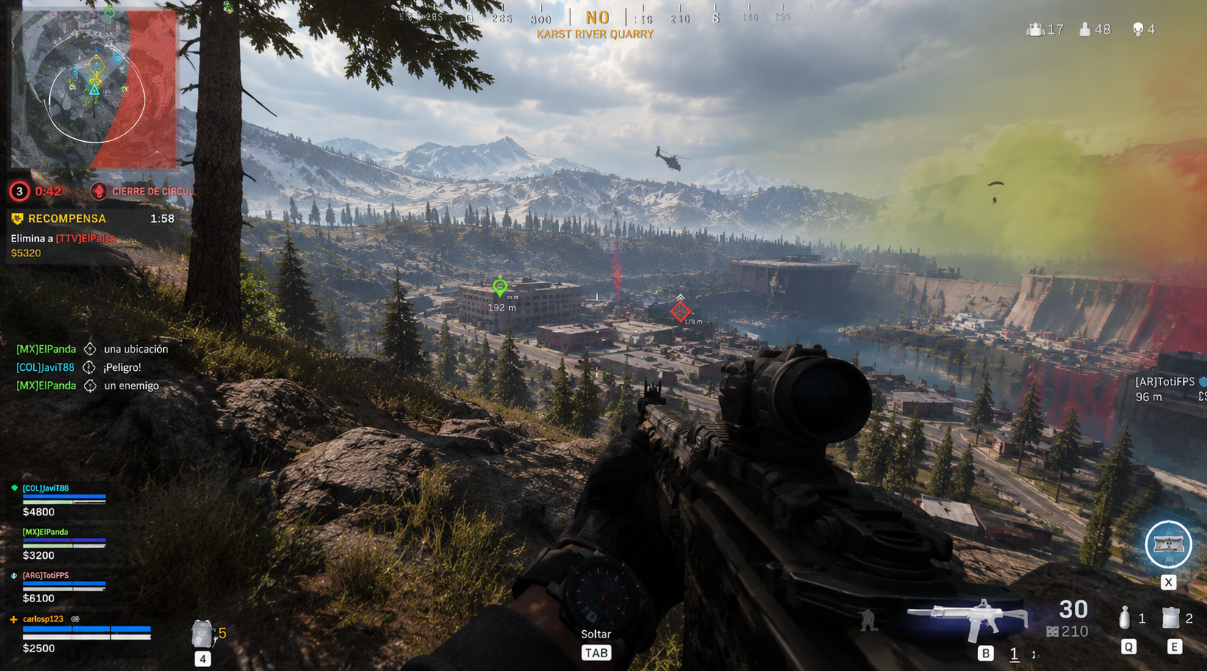
Once you reach the higher ranks in Warzone, simply copying a popular loadout stops working. Lobbies become full of players who already know the strong guns and perks, so the real advantage comes from understanding why a loadout works, when to deviate from it, and how to adjust on the fly based on the map, the circle, and what the enemy is doing. This guide focuses on the decision-making process that consistent high-rank players use when they build and adapt their kits.
Building Loadouts That Actually Hold Up in Ranked
Most players start with a YouTube or tracker loadout and never question it. At higher ranks that approach leaves you predictable. Strong players treat every loadout as a set of trade-offs rather than a fixed “best” setup. They think about range coverage, time-to-kill in the current meta, mobility, and how the kit performs when the fight goes longer than five seconds. A loadout that wins pure aim duels in open space can fall apart in buildings or when you get third-partied. The goal is to build something that covers your most common fight distances while still giving you an answer when the situation changes.
Primary and Secondary Pairing with Purpose
A good ranked loadout usually pairs a reliable mid-to-long range primary with a fast secondary that can finish close fights or create space. The exact guns change with the meta, but the logic stays the same. Your primary should be accurate enough that you can challenge at the ranges you actually fight most often. Your secondary needs to be ready the moment someone pushes your box or you get caught in a tight staircase. High-rank players also pay attention to reload times and empty-reload speed because those small windows are where most deaths happen once everyone can aim. If your secondary leaves you helpless for more than a second after a kill, it is often worth swapping even if the pure damage numbers look worse.

Perks and Equipment as Force Multipliers
Perks are where a lot of rank difference appears. Instead of defaulting to the most popular three, think about what problem you keep running into in your own games. If you die to information a lot, prioritize perks that help you gather or deny it. If you lose long fights because you run out of plates or ammo, lean into sustain. Equipment follows the same logic. A well-timed semtex or snapshot can create the exact opening you need, but only if you actually throw it at the right moment. Many players carry strong utility and then forget to use it under pressure. Practice the muscle memory of pulling and throwing equipment in realistic scenarios so it becomes automatic.
Adapting Mid-Match Without Panic
Even a perfectly crafted loadout will underperform if you refuse to change it when the game state shifts. High-rank players constantly re-evaluate what they are holding based on the circle, the remaining players, and the information they have.
Reading the Lobby and the Zone
Pay attention to how fights are playing out in your specific lobby. If most players are holding long angles and playing for third-parties, a slower, more accurate primary becomes more valuable. If the circle is forcing constant close-range chaos, you may need to prioritize mobility and a faster secondary even if it costs you some long-range strength. The zone itself also dictates adjustments. An early circle that favors high ground rewards different attachments and perks than a late circle that collapses into tight buildings. The players who climb consistently make small inventory and attachment changes between fights instead of forcing the same kit into every situation.
When and How to Swap Loadouts
Buying a new loadout mid-game is a real decision, not an automatic play. It costs money, time, and often exposes you at a buy station. Strong players only make the swap when the current kit is clearly losing them fights or when the remaining zone heavily favors a different style. They also plan the buy so they are not standing still in the open. A common habit is to clear the immediate area, drop a trophy or other cover utility, and complete the purchase as quickly as possible. If you are already low on cash or the circle is moving fast, it is often better to work with what you have and adjust positioning instead.
Practical Habits That Separate Consistent Ranked Players
Loadout knowledge alone does not move your rank. The habits around how you test, review, and refine those loadouts matter just as much.
Testing in Realistic Conditions
Shooting range numbers are useful, but they do not tell you how a gun feels when you are jump-shotting, sliding around a corner, or fighting while plated. Spend time in private matches or custom games recreating the fights you actually lose. Test the same loadout under movement, under pressure, and with limited plates. The gun that feels best when you are standing still is rarely the one that performs best in real ranked games.
Reviewing Loadout-Related Deaths
When you watch your own games, specifically look for deaths that were influenced by your kit. Did you lose because your secondary was too slow? Did you run out of ammo at the wrong time? Did a missing perk leave you without information or mobility when you needed it? These are usually clearer fixes than pure aim errors. Over a few sessions you will start seeing patterns, and those patterns tell you exactly what to change next.
Putting the System Together
High-rank Warzone is less about finding one perfect loadout and more about building a flexible system. You start with a strong core kit, understand the trade-offs, and then make small, deliberate adjustments based on the lobby and the zone. Players who treat loadouts as living tools rather than fixed templates adapt faster and lose fewer winnable fights. Pick one part of this process — pairing logic, perk selection, or mid-match adaptation — and run it deliberately for a week of ranked. The improvements compound once the decisions become automatic.
About the Author